Your marriage, and the mixed-faith marriage
Most marriages survive one spouse's faith crisis, and many come out stronger. What the ones that make it have in common.
The thing you are most afraid of is probably this one. So here is the first fact: in our experience, and in the research on mixed-faith marriages generally, most marriages survive one spouse’s loss of faith. The ones that end usually had other trouble already. And a large number of couples tell us, years later, that the crisis was the beginning of the best part of their marriage, because they finally met each other without the script.
What the believing spouse is going through
Your spouse did not ask for this. They married a believer, in a temple, with a promise about eternity, and the person across the table has changed the terms. They may feel betrayed, frightened for the children, ashamed in front of their family, and terrified about the afterlife. They may also feel, underneath, a flicker of their own doubt, and be angry at you for making it harder to ignore. Read When your spouse is leaving to see it from their side, and consider sending it to them.
The marriage and the Church are two different questions
The couples who make it separate the two. “Do we agree about the Church?” is now a no, and may stay a no. “Are we a team?” can still be a yes. Keep the second question on the table and off the negotiating block. Say it out loud, often: I am still me, I still choose you, we will figure out the rest together.
Do not try to deconvert your spouse
It almost never works, and it costs the one thing you cannot afford to lose: their trust that you are not trying to take their faith from them. Offer to share what you have read, once, and then wait, for years if necessary. If they ask, answer honestly. If they do not, leave it.
The practical negotiations
Everything that used to be automatic now has to be discussed: attendance, tithing, garments, the temple, callings, what the children are taught, family prayer, Sunday, holidays, what to tell each set of parents. Take them one at a time. A few principles that help:
- Nobody’s beliefs get to set the rules for the other’s body, money or conscience. Garments, coffee, tithing on your own income, and what you say in your own prayers are yours.
- Shared things get shared decisions. Children, joint money, and what the family does together are negotiated, not announced.
- Trade generously. Go to the ward Christmas party; ask for a Sunday hike in return. The point is to keep giving each other things.
- Write the children’s message together. See Your children.
Sex
A faith transition changes the sexual relationship too, sometimes for the better and sometimes with a crash. The rules one of you is questioning were also the rules that shaped your sex life, and the believing spouse may feel that the non-believer now wants things they cannot give. Talk about it directly; Sexuality after the rules change and Natasha’s work are the place to start.
Get help early, not late
Couples counselling works for this, and it works much better at month three than at year three. Look for a therapist who understands Mormonism and is not trying to fix either of you: Finding a therapist who understands. If you cannot find one nearby, Natasha’s practice and John and Margi’s couples coaching both work online. The six-hour webinar Natasha and John recorded on mixed-faith marriage covers all of this in depth; the episodes 40 Thriving as a Mormon Mixed-Faith Couple – Kattie and Allan Mount with Allan and Kattie Mount, a believing wife and non-believing husband, are the story of a couple doing it in real time.
If it does not survive
Some marriages end. If yours does, it is not a verdict on you or your beliefs. The Good Divorce is about ending well, especially with children, and a therapist can help you do it without turning the children into the battleground.
In their words
From the podcast. Machine transcripts, lightly edited; the video is authoritative.
“There is legitimate fear that the spouse will be devastated, that divorce could be imminent if you come out, or that it could really disrupt the family or jeopardize important relationships. There can be deep, deep fear of consequences.”
“This is the position a lot of spouses are in. For the believing spouse, dealing with a transitioning spouse can feel like: I didn't ask for this.”
“I don't like to say, oh, I'm here to save marriages. But we do. We do save marriages. Marital therapy works.”
From the podcast

Healthy Marriage
In these episodes, John and Margi have a discussion with Natasha Helfer Parker, LCMFT, CST about forming a foundation for marriage that withstands change. They also discuss guiding principles to maintaining successful…

Thriving as a Mormon Mixed-Faith Couple – Kattie and Allan Mount
Join us today on The Gift of the Mormon Faith Crisis as Allan and Kattie Mount share with us their top tips for thriving as a Mormon mixed-faith couple. Allan and Kattie Mount co-host the “ Marriage on a Tightrope ”…
Stories on this
 How to Improve Your Marriage After One of You Loses Their Testimony | Ep. 157-159
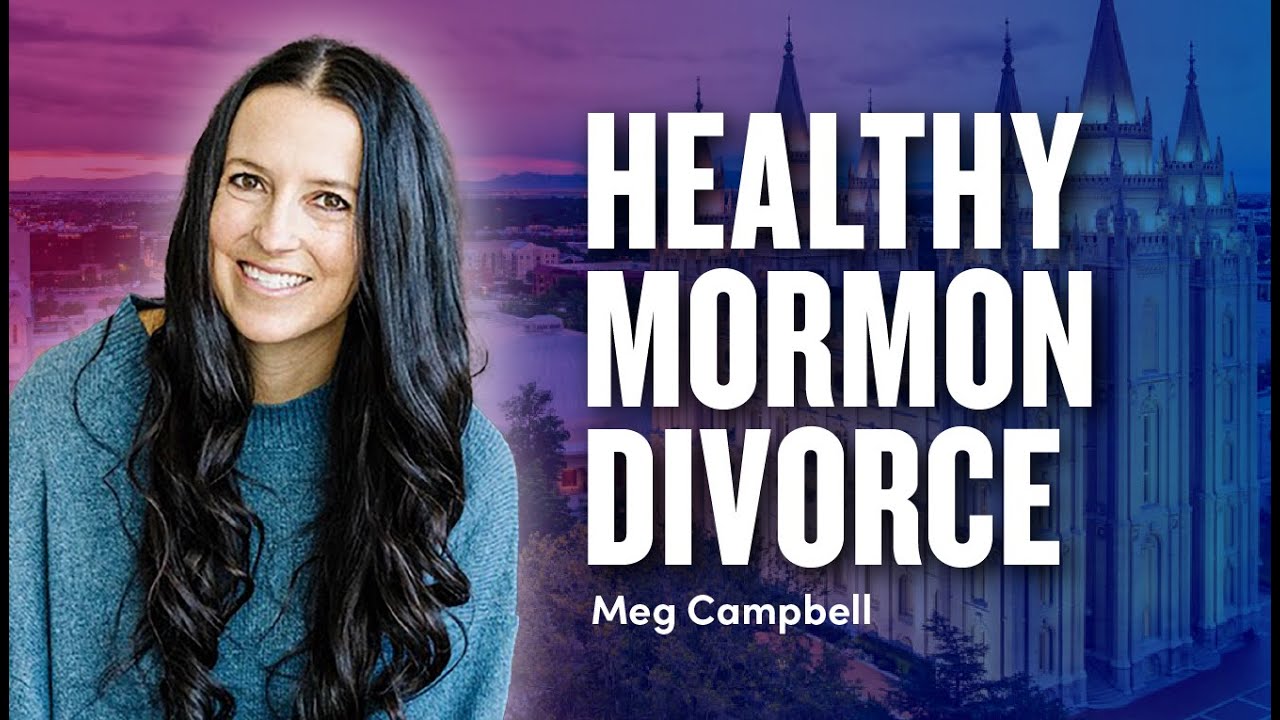 Striving for a Healthy Mormon Divorce - Meg Campbell | Ep. 1951
 How We Almost Ruined Our Mixed-Faith Marriage | Ep. 1799
 Jodi Hildebrandt Ruined My Mormon Marriage – Brian Tibbets | Ep. 1865
 Navigating a Marriage When One Loses Their LDS Testimony | Ep. 182-185
 Mormon Wife Loses Faith, Husband is Elder’s Quorum President – Devlyn and Randy Day | Ep. 2169