Your children
What to tell them, at what age, and how to raise them with values when the Church no longer supplies the script.
Parents in a faith crisis ask the same first question: will I damage my children? The honest answer, from our own families and the hundreds we have worked with, is that the thing that damages children is not their parents’ beliefs. It is secrets, contempt between their parents, and being made to choose. Avoid those three and the rest is ordinary parenting.
Tell them the truth at the size they can hold
- Small children need to know that the family is safe and that people believe different things. “Mum still goes to church and believes what she believes. Dad has some different ideas. Both are okay, and we both love you.” That is enough. They will ask more when they are ready.
- Older children and teenagers notice everything and deserve honesty. Tell them what has changed for you, tell them you will not decide their beliefs for them, and tell them there are no sides in your house. The thing teenagers hate most is being handled.
- Adult children should hear it from you, plainly, before they hear it elsewhere, with no request that they do anything about it.
The scripts have wording for each age. Whatever you say, say it with your spouse if you have one, in one message, even if your beliefs differ. “We disagree about this and we are still a team” is the most reassuring thing a child can hear.
The mixed-faith home
If one parent believes and one does not, the children live in both worlds. Some things that help:
- Agree what the children will be taught and by whom, and what they will be free to decide (baptism at eight is the big one; many couples delay it or let the child choose later).
- Do not undermine each other’s beliefs to the children. “Ask your mother what she thinks” is always available.
- Let the children see you disagree respectfully. It is one of the most useful things they will ever learn.
- Watch for the child who becomes the mediator or the spy. That is a role no child should carry.
Episodes 28 Parenting After a Mormon Faith Crisis: An Overview through 31 Parenting After a Mormon Faith Crisis: An Overview are the podcast’s full overview of parenting after a faith crisis, and 22 Communicating with Children During a Faith Transition and 23 Communicating with Children During a Faith Transition are about the conversations themselves.
Raising children with values, without a manual
The Church gave you a curriculum. Now you build one. Most families find they already had the values; what they lose is the scaffolding: the weekly lesson, the calendar, the community of other parents. Replace the scaffolding on purpose:
- Choose your family’s five or six values and say them out loud, often. Honesty, kindness, curiosity, work, service, fun. Put them on the fridge.
- Keep a family night if you liked it. Uplift Kids and Parenting Beyond Belief have material for exactly this.
- Give them other adults and other communities: sport, music, scouts, a Unitarian congregation, grandparents.
- Teach them how to think rather than what to think. They are going to meet the Church’s claims at some point; a child who has been taught to ask “how do we know that?” is safe.
The fear about the eternities
If your believing spouse or parents fear for the children’s eternal welfare, that fear is real to them and arguing with it does nothing. Acknowledge it, reassure them of the things you can honestly promise (the children will be loved, will know both traditions, will be free), and let the fear be theirs to carry.
When your children stay in
Some children of parents who leave stay in the Church, sincerely. That is their right, and the parent who leaves has the same job the believing parent had: love without conditions. If you want them to respect your conscience, respect theirs.
From the podcast

Communicating with Children During a Faith Transition
In Part 1 recorded January 31, 2017, Margi and John Dehlin interview Julie De Azevedo-Hanks, Kerstin Koldewyn, and former LDS Quorum of the 70 member Hans Mattsson (Sweden) about how to speak to children during a Mormon…

Parenting After a Mormon Faith Crisis: An Overview
Join us now as we discuss Part 1 and 2 in our series of parenting after a Mormon Faith Crisis. In this episode Natasha Helfer Parker, Margi and John Dehlin provide some overarching principles to guide post-Orthodox…

Creating a Family Culture
In this episode of The Gift of the Mormon Faith Crisis, Margi and John share and discuss their ideas in creating a family culture. Margi uses the metaphor of a “tower” with 5 building blocks to show their cumulative…
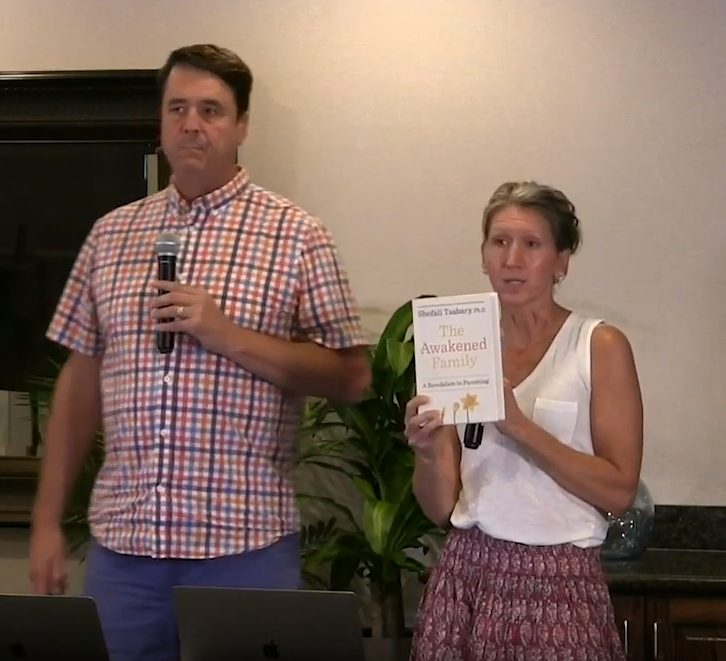
Conscious Parenting after a Religious Faith Transition (August 2019 THRIVE Retreat)
Recorded at the THRIVE Retreat, 8/30 – 9/1/2019 in Salt Lake City, Utah – including the participation of ~40 audience members. Conscious Parenting after a Religious Faith Transition: Other topics covered at the retreat…
Stories on this
 330: Raising Children in a Mixed-Faith Mormon Home
 Parenting after a Mormon Divorce – Amy Lloyd Pt. 2 | Ep. 1818
 Parenting After Mormonism with Rachel | Ep. 1608
 When Your Adult Mormon Children Stop Believing – Rod & Nan Osborne | Ep. 1761-1762
 Nashville Mormon Story: Darian and Jennifer Ellsworth Rogers | Ep. 1912
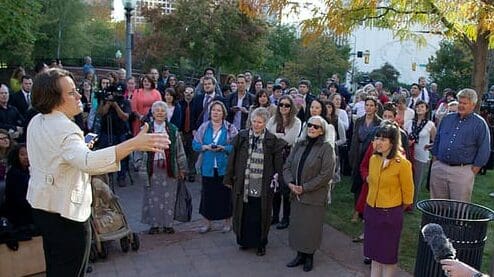 Raising Children in a Non-Traditional LDS Home | Ep. 143-146