Finding a therapist who understands
What to look for, what to ask on the phone, where to search, and the difference between a therapist and a coach.
The right therapist can shorten this by years. The wrong one, a believing therapist who treats your doubt as the problem, or a secular one who has never heard of garments and treats your religion as a joke, can set you back. Here is how to find the right one.
What you are looking for
Someone who:
- Understands Mormonism from the inside, or has treated enough Latter-day Saints to know what a temple recommend interview is without you explaining it.
- Is not trying to move you in either direction. Not to restore your faith, not to finish the job of removing it. Your beliefs are yours; the therapist’s job is your wellbeing.
- Has training in what you need: grief, couples work, OCD (ERP or ACT), trauma (EMDR, somatic), sex therapy. A faith transition touches several of these; pick the one that is loudest right now.
- You feel safe with within two sessions. If not, change. This is normal and therapists expect it.
Where to look
- Mormon Mental Health Association: clinicians who work across the whole spectrum of Mormon belief and are not affiliated with the Church.
- Secular Therapy Project: vetted, evidence-based, non-religious. Good when you want no religion in the room at all.
- Psychology Today therapist finder: search your area, then read profiles for “religious trauma”, “faith transition”, “spirituality” or “deconstruction”. Be careful with the “LDS/Mormon” filter; it mostly finds believing therapists offering faith-based counselling.
- Queer Mormon Therapists directory and the LGBTQ+-Affirmative Psychotherapist Guild of Utah if you are LGBTQ+.
- The people listed in our resource directory, whom we know.
- Ask. The Mormon Stories Facebook group and the THRIVE groups have running threads of recommendations by city.
What to ask on the phone
Most therapists offer a free fifteen-minute call. Use it.
- “Have you worked with people leaving the LDS Church? What was that like?”
- “If I decide to stay, or to leave, how would you feel about that?” (The right answer is some version of “that’s yours to decide”.)
- “What approach do you use for [grief / OCD / trauma / couples]?”
- “Do you take my insurance, and what does it cost if not?”
- “Do you do video sessions?” Distance is no longer a reason to go without.
Therapist or coach?
A therapist is licensed, can diagnose and treat mental illness, is bound by a professional code, and is usually covered by insurance. A coach is not licensed, does not treat illness, and works on goals, decisions and skills. Both can be excellent; they are different tools. If you are depressed, anxious, traumatised or your marriage is in crisis, start with a therapist. If you are functioning and want help thinking through a decision or a family conversation, a coach who knows this territory can be ideal. John explains his own education, training and licensure status on his site.
Cost
Therapy is expensive and it is worth more than most things you could spend the money on. If money is the barrier: university training clinics offer low-cost sessions with supervised students; many therapists keep a few sliding-scale slots; the Secular Therapy Project and Open Path Collective list affordable options; and a single consultation to get oriented is better than none.
For the believing spouse
A believing spouse who wants their own therapist should have one, and it can be a believing therapist if that is what makes them feel safe. What matters for the marriage is that whoever does the couples work is neutral about the outcome.
From the podcast
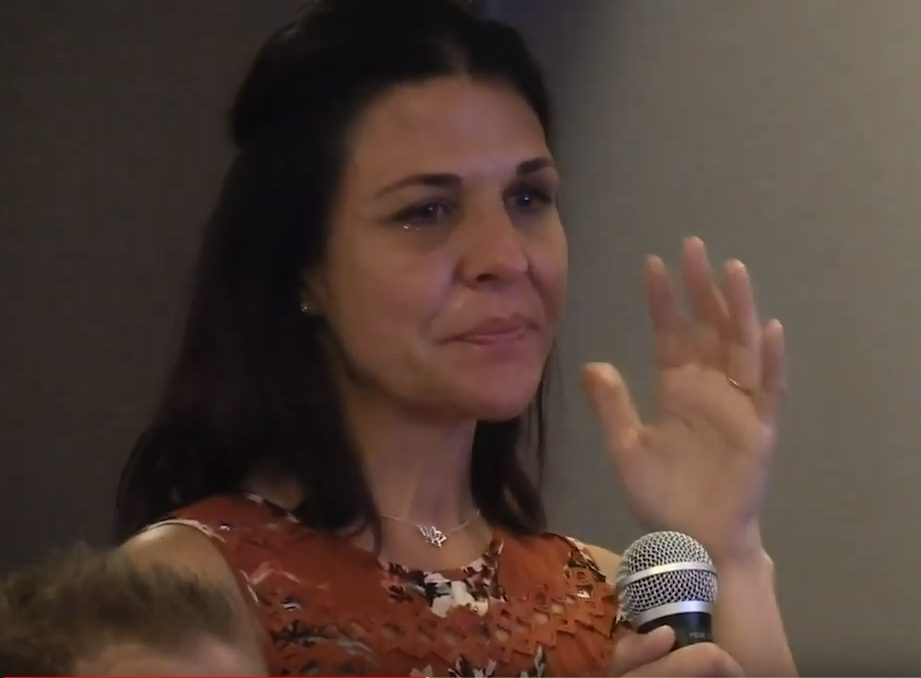
Fundamentals of Mental Health in a Religious Transition (August 2019 THRIVE Retreat)
Recorded at the THRIVE Retreat, 8/30 – 9/1/2019 in Salt Lake City, Utah – including the participation of ~40 audience members. Fundamentals of Mental Health in a Religious Transition Part 1: Fundamentals of Mental…
Stories on this
 Mormon Missionary Faith Crises and Early Return Pt. 2: Depression, Faith Crisis, and Suicidality | Ep. 644
 Overcoming Religious Shame and Scrupulosity – Marc Oslund | Ep. 1598
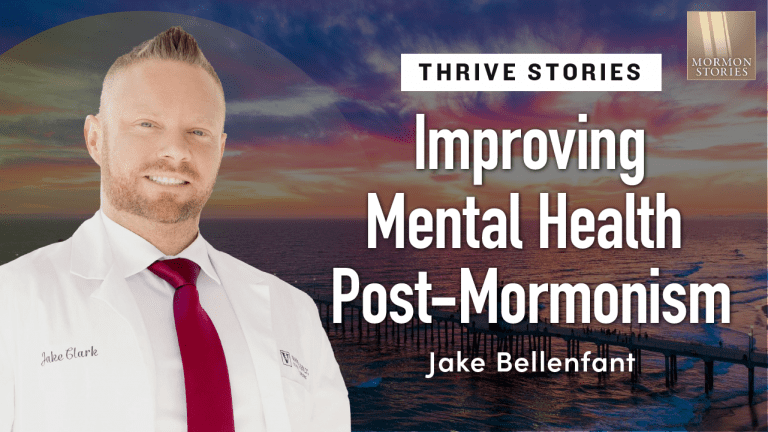 Improving Mental Health After Mormonism – Jake Bellenfant’s THRIVE Story | Ep. 1566
 323: Scrupulosity, OCD and Acceptance and Commitment Therapy with John Dehlin
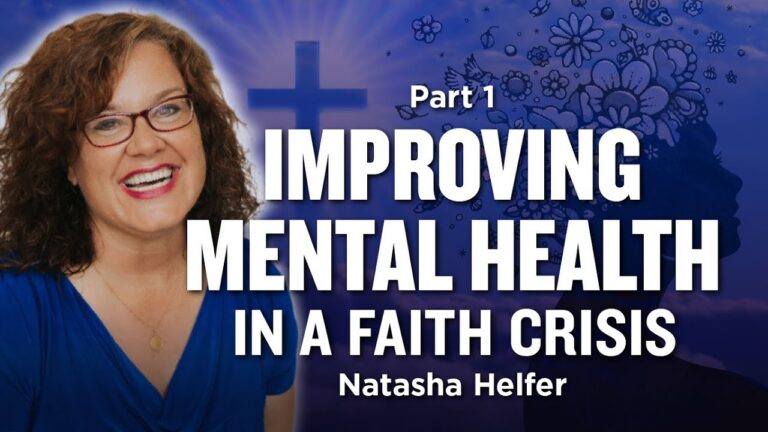 1300-1301: Improving Mental Health During a Mormon Faith Crisis
 229-230: Understanding Scrupulosity Within the LDS Church