Anxiety and depression
When the crisis stops being grief and becomes something that needs treatment, how to tell, and what works.
Grief is normal and passes. Anxiety and depression can grow out of it and do not pass on their own. Knowing the difference matters, because both respond well to treatment and both get worse when ignored.
Anxiety
Anxiety in a faith crisis usually looks like one of these:
- Compulsive research. Reading until 3 a.m., checking one more source, unable to stop. This is anxiety wearing the costume of diligence.
- Fear of the afterlife, sometimes years after belief has gone. “What if I’m wrong?” at 4 a.m. is common and it is a feeling, not evidence.
- Social fear: of the ward, the interview, the family dinner, being found out.
- Panic, the physical kind: racing heart, breathlessness, the sense of unreality. Many people have their first panic attack during a faith crisis and think they are dying.
- Scrupulosity, which has its own guide: Scrupulosity, or religious OCD.
What helps: limits on reading, exercise, sleep, breathing that lengthens the exhale, and cognitive-behavioural therapy or acceptance and commitment therapy with someone who understands the religious content. Medication helps some people through the worst of it and there is no shame in it; the Church itself has said so.
Depression
Depression is grief that has stopped moving. Signs it has become that:
- Flatness that does not lift for weeks; nothing is interesting.
- Sleeping far more or far less, eating far more or far less.
- Withdrawing from the people who could help.
- Hopelessness: not “this hurts” but “this will never be different”.
- Thoughts of not wanting to be here.
The last one is the one to act on today: tell a doctor, a therapist, or someone close to you, and if you are in immediate danger, contact emergency services where you live. Thoughts like that are a symptom, they are common in a faith crisis, and they lift with treatment.
For the rest: see a doctor or a therapist. Depression after a faith crisis responds to the same treatments as any other depression, and it responds faster when the therapist understands what you lost. Finding a therapist who understands is about choosing one.
Why it is so common here
You have lost your community, your certainty, your purpose and possibly your family’s approval in one go, and you may be doing it in secret. That is a recipe for depression in anyone. The research on people who leave religion shows exactly this: the harm runs through the loss of social support far more than through the loss of belief. That is good news, because social support can be rebuilt. Community is about how.
What the podcast said
Episodes 55 Fundamentals of Mental Health in a Religious Transition (August 2019 THRIVE Retreat) and 56 Fundamentals of Mental Health in a Religious Transition (August 2019 THRIVE Retreat), recorded at the 2019 THRIVE retreat, are Natasha’s fundamentals of mental health in a religious transition: sleep, movement, connection, professional help, and permission to not be fine for a while.
From the podcast

Fundamentals of Mental Health in a Religious Transition (August 2019 THRIVE Retreat)
Recorded at the THRIVE Retreat, 8/30 – 9/1/2019 in Salt Lake City, Utah – including the participation of ~40 audience members. Fundamentals of Mental Health in a Religious Transition Part 1: Fundamentals of Mental…
Stories on this
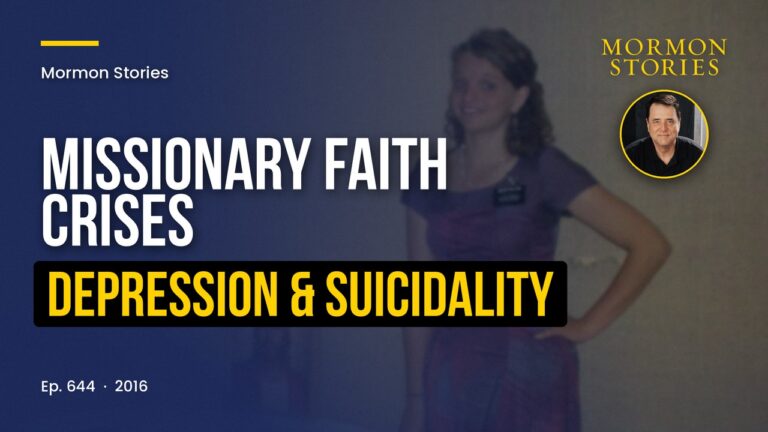 Mormon Missionary Faith Crises and Early Return Pt. 2: Depression, Faith Crisis, and Suicidality | Ep. 644
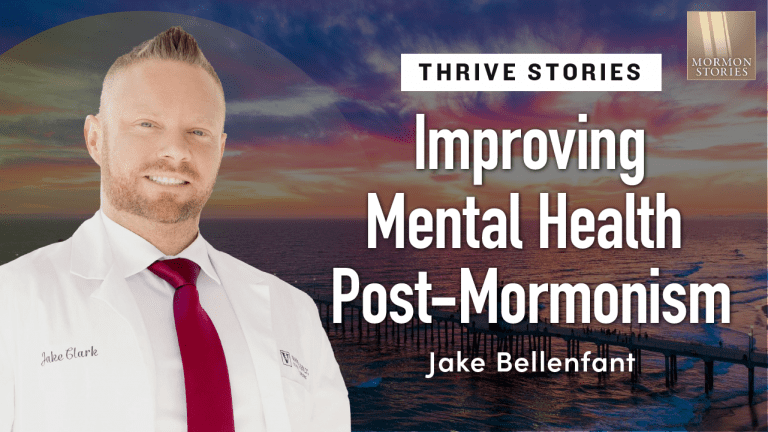 Improving Mental Health After Mormonism – Jake Bellenfant’s THRIVE Story | Ep. 1566
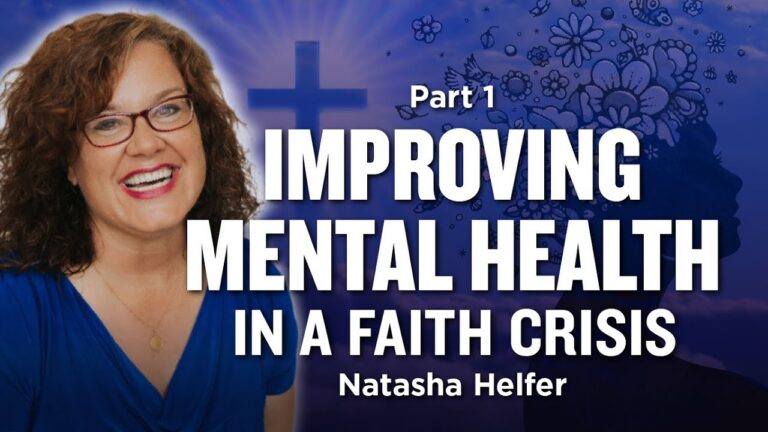 1300-1301: Improving Mental Health During a Mormon Faith Crisis
 930-932: Depression, Mormonism, and Faith Transitions
 877-880: Brooke Bonham Miller and Josh Miller – Seeking Support from Spencer Fluhman and the Maxwell Institute in a Faith Crisis
 Tommy “THETOMSTERS” & Madison Johnson | Ep. 1678