🔍 Understand what is happening
How people come to believe, and how they stop
Belief is built by a process, and it comes apart by a process. Understanding both takes the shame out of losing your testimony.
How conversion works
Nobody believes the Church is true because they weighed the evidence. Almost everyone believes it because they were born into it, or because missionaries taught them at a moment when they needed what it offered: community, certainty, a family that would last forever, a purpose. The testimony comes afterward, built the way any conviction is built: by saying it out loud, repeatedly, in front of people who approve; by feeling strong emotion in settings designed to produce it and learning to call that emotion the Spirit; by investing time, money and identity until the cost of doubting is too high; and by being taught that doubt itself is a spiritual danger.
None of that is unique to Mormonism. It is how humans form group beliefs, and it is why sincere, intelligent people can believe things that are not true. The podcast episodes 7 Understanding the Mormon Conversion Process and 8 Understanding the Mormon Conversion Process walk through this in detail.
How deconversion works
Losing belief is also a process, and it usually follows a shape.
- The first crack. Something does not fit: an essay, a podcast, a fact from a friend, a policy that hurts someone you love.
- Trying to make it fit. Apologetics, prayer, more scripture study, “putting it on the shelf”. This can last years and for many people it works for a while.
- The research spiral. At some point the shelf is too heavy and the person reads everything. This stage is exhausting and often obsessive, and it is where anger tends to arrive.
- Noticing. One day the person realises they have not believed for some time. This is often quiet, and often comes with a strange calm.
- Everything else. Grief, telling people, deciding what to do, rebuilding. The map covers those.
Why it is not a choice
People will tell you that you chose to lose your faith. You did not, any more than you chose to stop believing in Santa Claus. Once you have seen certain things, you cannot decide to un-see them. What you can choose is what you do next, and that choice is yours, on your timeline. See Stay, step back, or leave.
Why it feels like a death
Belief was carrying more than you knew: your sense of the afterlife, your certainty about what is right, your community, your marriage’s shared foundation, your parents’ approval, your idea of who you are. When it goes, all of that is unsupported at once. That is why Grief is the first mental-health guide we point people to.
The good news in this
If belief is built by a process, it can be rebuilt by one, on your own terms this time. Many people find that what they lost was certainty and what they gain is honesty, and that the trade is worth it. That is the “gift” in the podcast’s name, and Why we call it a gift explains what we mean by it.
In their words
From the podcast. Machine transcripts, lightly edited; the video is authoritative.
“Faith transitions often partner with a different type of transition, because you're trying to make meaning of life. A lot of times we look to our religious or spiritual beliefs to make meaning, and all of a sudden that isn't working for some reason. Now we have space for different meaning-making.”
From the podcast

Understanding the Mormon Conversion Process
In this two-part episode of the Gift of the Mormon Faith Crisis, Dr. John Dehlin & Margi Weber Dehlin and Natasha Helfer Parker take a deeper look at how religious conversion and de-conversion happen, and explore how…
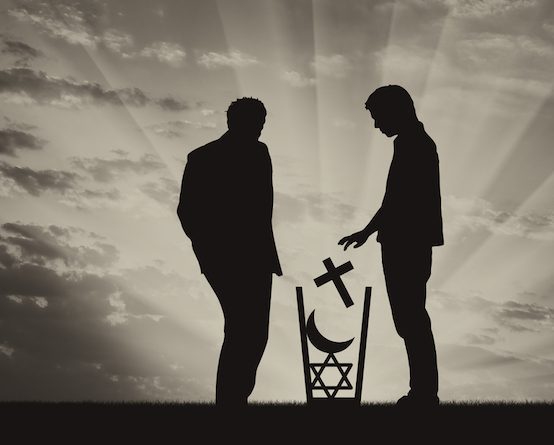
Understanding the Mormon Deconversion Process
In today’s episode of the Gift of the Mormon Faith Crisis, John, Margi and Natasha discuss the religious deconversion process, and why it is important to understand for someone either experiencing a faith crisis, or for…
Stories on this
 400: Top 5 Myths and Truths about Why Committed Mormons Leave the Church
 332: Navigating a Mormon Faith Transition
 LDS Bishop Adam and Marlana Hughes – Leaving Mormonism in Tucson, Arizona | Ep. 1360
 Ten Things TO DO In Your Faith Deconstruction w/ Britt Hartley | Ep. 2013
 Why People Leave the LDS Church and How We Can Help | Ep. 111
 Ten Things NOT To Do In Your Faith Deconstruction w/ Britt Hartley | Ep. 2011