🔍 Understand what is happening
What the data says
Why people actually leave, who they tell, what it costs, and who stays, from our 2012 survey of 3,086 former believers and the Church's own 2013 study.
Arguments about why people leave the Church are usually arguments between two people’s anecdotes. There is data. In 2011 John Dehlin, with Seth Holley and Michael McKeown, surveyed more than three thousand people who had once believed the Church was “the only true and living church” and no longer did. Two years later the Church commissioned its own internal study of members in faith crisis, and its findings, when they leaked, lined up with ours. Here is what both found. Every number below is from the published report; the sample was self-selected and the authors say so. The fuller treatment, with later surveys, retention charts and every source linked, is on our sister site Why Mormons Leave.
Our survey, 2012
Understanding Mormon Disbelief
3,086 people who once believed the Church was "the only true and living church" and no longer do, surveyed in the fall and winter of 2011. Self-selected, not representative; the report says so. Read the full report (PDF).
Why they stopped believing
Respondents rated dozens of possible factors from 0 (not a factor) to 4 (the primary factor). On average each person named 15 major factors. Issues stack up; there is almost never one.
Average score on the 0–4 scale. The two lowest-rated reasons of all were a desire to sin and being offended.
How many major issues?
- Fewer than 5 major issues: 12%
- 5 to 15 major issues: 41%
- More than 15 major issues: 46%
Rising over time
Issues that mattered more to people who left more recently:
- Treatment of homosexuality
- Historical issues in general
- Polygamy
- DNA and the Book of Mormon
- Book of Abraham
- First Vision
- Treatment of women
More important to women
- The Church's stance on women
- Women and the priesthood
- The Church's stance on homosexuals
- Polygamy and polyandry
- Abuse
More important to men
- Losing faith in God or Jesus
- Science
- Anachronisms in the Book of Mormon
- Book of Abraham
What happened next
Church attendance now
How they describe themselves
Who they told
Among disbelievers who still attended: 72% had told their bishop little or nothing, 92% had told the ward little or nothing, and 14% had told even their spouse little or nothing. Among those who had left, only 1% of spouses were in the dark.
What it cost
54% rated at least one cost of disbelief as high or extremely high. Disbelievers who stayed active reported higher mental, spiritual and marital costs than those who left; those who left reported higher costs with parents, siblings and friends.
Would they come back?
About 24% of those who had left said they would consider it under some conditions. More than half of those "yes" answers were conditions the Church could not meet. Of the rest, the themes were transparency about history, acceptance of LGBTQ people, and being allowed to belong without full belief.
Who stays
Among disbelievers, these predicted still attending:
- Years of prior activity (each year adds about 0.8% to the chance of still attending)
- Being married
- Number of leadership callings held
The Church's own study
LDS Personal Faith Crisis report (2013)
An internal report commissioned by the Church's leadership and later leaked, drawing on a survey of members in faith crisis. It found that the large majority of reasons given were tied to Joseph Smith and the authenticity of the Book of Mormon, and that the internet had sped the process up. It reached the same broad conclusions as our survey a year earlier.
Stories on this
 400: Top 5 Myths and Truths about Why Committed Mormons Leave the Church
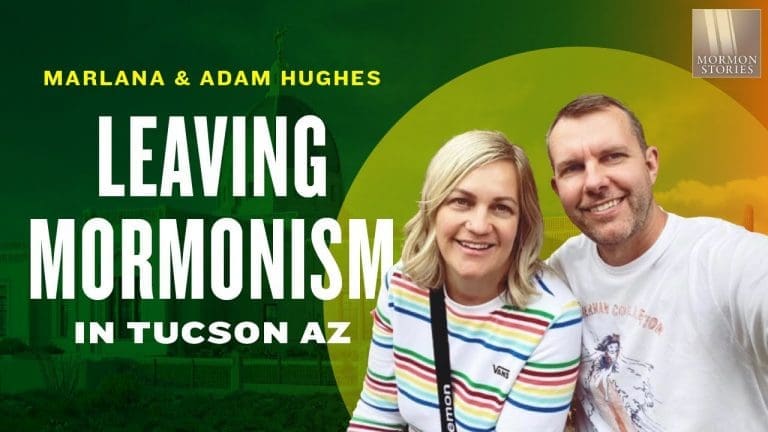 LDS Bishop Adam and Marlana Hughes – Leaving Mormonism in Tucson, Arizona | Ep. 1360
 Why People Leave the LDS Church and How We Can Help | Ep. 111
 My LDS Conversion and De-Conversion – Heather | Ep. 139-140
 684-686: Margi Dehlin’s Mormon Transition
 Why More Mormons Don’t Leave the Church w/ John Larsen & Carah Burrell | Ep. 1720