Spirituality after
You can keep a spiritual life, build a secular one, or take years to decide. What people actually do, and what the Church did not tell you about the options.
You were taught that there were two options: the Church, or nothing. The truth is that the people who leave scatter across every option humans have ever invented, and most of them find one that fits. From our survey, about half now call themselves agnostic, atheist or humanist; a fifth still call themselves Mormon in some sense; a tenth joined another Christian church; a few became Buddhist; a fifth are still deciding. All of those are fine.
What “spiritual” can mean now
- Awe. Standing under stars, holding a baby, hearing a choir. The feeling is real; the explanation is optional.
- Practice. Meditation, prayer without an address, a walk at the same time every morning, a journal, a Sabbath you keep because rest is good.
- Ethics. A moral life chosen rather than assigned. Many people find this is where their spirituality went.
- Community. A Unitarian Universalist congregation, a Quaker meeting, an Episcopal parish that will take you as you are, a sangha, a humanist group. Some people miss church more than God and find that a church with no truth claims to fail is exactly right.
- The old things. Hymns, the King James cadences, a nativity, the Tabernacle Choir at Christmas. You can keep them. They were never the problem.
What people try
- Progressive Christianity. For people who kept Jesus and lost the institution. Brian McLaren’s Faith After Doubt is the map.
- Buddhism, especially secular. Noah Rasheta, a former Latter-day Saint, teaches it without the supernatural: Secular Buddhism.
- Humanism and atheism. A moral, meaningful life with no gods. More people land here than any other single place, and they report being fine.
- Staying Mormon in some way. Cultural Mormons, nuanced members, people who attend and believe almost none of it. Stay, step back, or leave.
- Nothing in particular. Some people find the hunger fades, and they do not miss it. That is allowed too.
Take your time
The first year after leaving is not the time to choose a new religion, any more than the first year after a divorce is the time to marry. Some people rush to fill the space and end up in another high-demand system. Live without an answer for a while. See what you actually miss. Rebuild that.
The one thing to keep
Whatever you were told about the Spirit, the experiences were yours: the peace in the temple, the tears at a baptism, the sense of being watched over on a bad night. They came from your own mind and body, which means you still have the equipment. John Hamer’s THRIVE Day talk, 64 THRIVE Day Presentations, is about rethinking spirituality beyond Mormonism; Lisa Hacking’s, 65 THRIVE Day Presentations, is called “My bosom still burns”.
From the podcast
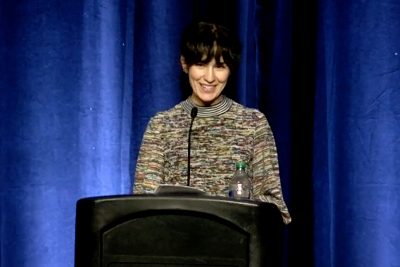
THRIVE Day Presentations
Please enjoy the presentations from THRIVE-Day 2019 held in Salt Lake City, UT on 11/17/2019. 064: John Hamer – Rethinking Spirituality Beyond Mormonism: 065: Lisa Hacking – My Bosom Still Burns: 066: Amber Scorah –…
Stories on this
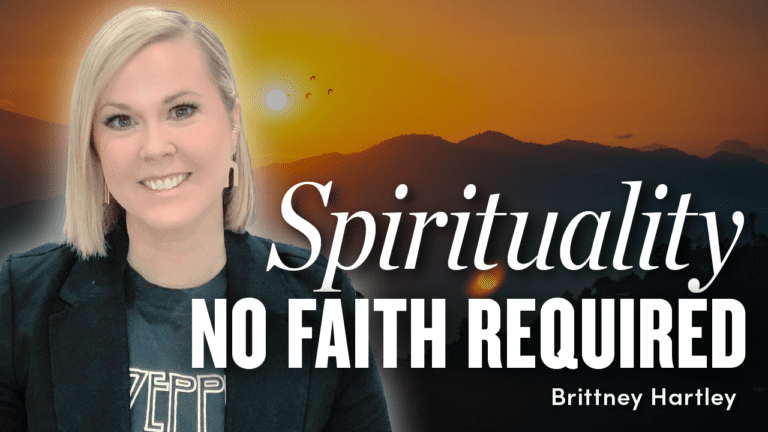 No Nonsense Spirituality w/ Britt Hartley | Ep. 1890
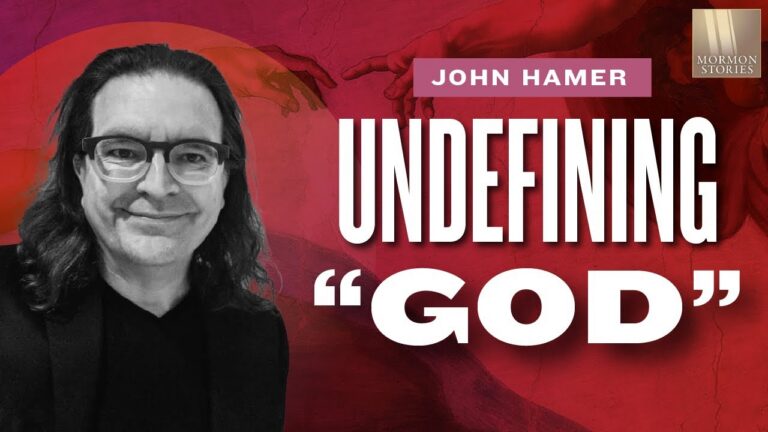 1390: Undefining ‘God’ with John Hamer
 From Mormonism to Progressive Christianity – Randy Bell | Ep. 1533-1534
 Kim Sandberg Turner – Navigating a Mormon faith transition as a Woman of a Certain Age | Ep. 701-704
 Confronting Nihilism After Mormonism w/ Brittney Hartley | Ep. 1840
 1373: Zelph on the Shelf – 5 Years of Laughter, Wisdom, Healing, and Growth