Who am I now?
You were a Mormon before you were anything else. Rebuilding an identity that is yours, without making "ex-Mormon" the new whole of it.
“Mormon” was not one of your identities. It was the frame the others sat in: son or daughter of God, returned missionary, temple-married, priesthood holder, Relief Society sister, member of the true church. When the frame goes, people report a peculiar vertigo: I know what I do not believe; I do not know who I am.
Why it is so disorienting
A high-demand religion supplies identity wholesale: your role, your rank, your schedule, your clothes, your language, your future, your friends, your enemies. It also supplies an answer to every question before you ask it, which means you may never have found out what you think. Many people discover in their thirties or fifties that they do not know what music they like, what they want to do on a Saturday, or what they believe about anything, because they never had to know.
What helps
- Try things. Coffee, a tattoo, a Sunday without a plan, a novel you were told was inappropriate, a political opinion of your own. Not as rebellion, as research. Keep what you like.
- Notice what you kept. Honesty, work, service, family, curiosity, singing. Those are you.
- Let the story be complicated. You were sincere. You were also misled. Both are true, and you do not have to hate the person who believed in order to be the person who does not.
- Do not make ex-Mormon the whole identity. It is a real one and it is good company for a while. But an identity built on what you left keeps you facing backward, and the people who thrive eventually stop needing it as the headline.
- Give it time. Identity is built the way belief was: by doing things repeatedly among people who see you. Two years in, most people can answer the question.
For women in particular
Latter-day Saint women were handed a narrower identity than men and told it was divine: wife, mother, nurturer, presided-over. Leaving means finding out what else you are, sometimes for the first time, and doing it while the people around you still expect the old role. Episodes 32 Top Issues/Tips for Mormon Women after a Faith Crisis to 36 Top Issues/Tips for Mormon Women after a Faith Crisis are the podcast’s four evenings on exactly this. Stephenie Larsen’s THRIVE Day talk, 71 THRIVE Day Presentations, is called “Standing on your own after Mormonism”.
For people who left a mission, BYU or Church employment
Your identity was also your résumé. Give the loss its due, and then notice that the skills were real: languages, discipline, public speaking, organising people, working without supervision. Former missionaries are famously employable for reasons that have nothing to do with the Church being true.
Tell your story
At some point, telling it helps: to a friend, to a group, on wasmormon.org, to Mormon Stories. Julienna Viegas’s talk, 67 THRIVE Day Presentations, is about finding yourself in the transition; Amber Scorah, who left the Jehovah’s Witnesses, gave 66 THRIVE Day Presentations on exiting religion and finding a new life. Hearing other people’s stories is how most of us found out we were not alone, and telling yours is how the next person will.
From the podcast
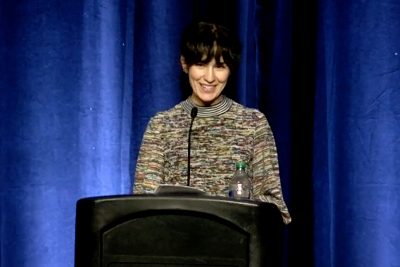
THRIVE Day Presentations
Please enjoy the presentations from THRIVE-Day 2019 held in Salt Lake City, UT on 11/17/2019. 064: John Hamer – Rethinking Spirituality Beyond Mormonism: 065: Lisa Hacking – My Bosom Still Burns: 066: Amber Scorah –…
Stories on this
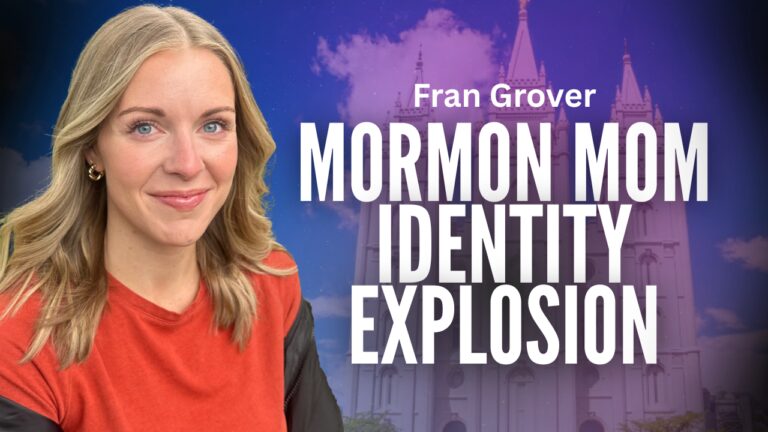 Mormon Mom Identity Explosion – Fran Grover | Ep. 1961
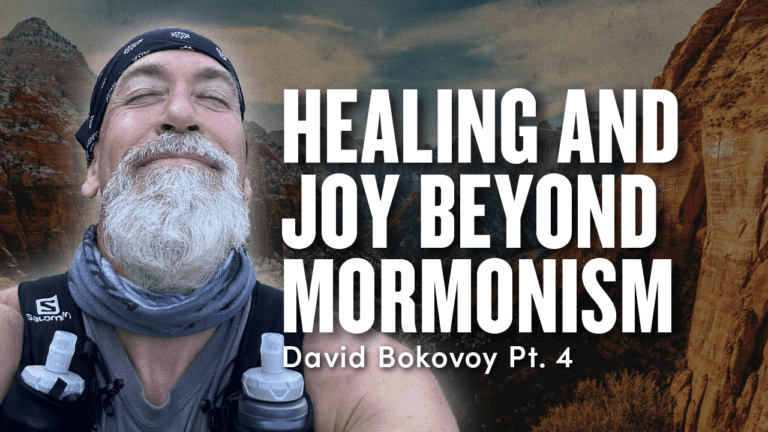 Healing & Joy Beyond Mormonism – David Bokovoy Pt. 4 | Ep. 1878
 A Mormon Missionary in the Philippines – Emma Pt. 2 | Ep. 1568
 415: Kate Kelly on the Ordination of Mormon Women (ordainwomen.org)
 Finding Joy After Mormonism w/ Sharon Beesley | Ep. 2079
 The Dark Side of a Mormon Mission – Brinley Jensen | Ep. 1680-1681