What not to say, and what to say instead
The sentences that reliably make it worse, and the ones that keep people close. For spouses, parents, siblings, friends and ward members.
Everyone means well. Almost everyone says one of these anyway. Here is the list, with what to say instead.
Please do not say
“You just want to sin.” It is the least true explanation and the most insulting. Most people who leave were keeping every rule on the day belief ended.
“Someone must have offended you.” Nobody leaves a lifetime over a bruised feeling. They leave over information.
“You never really had a testimony.” They had one exactly like yours. That is what makes this so hard for them.
“You’ve been deceived by anti-Mormon lies.” Most of what ends belief is on the Church’s own website. Say this and they will know you have not looked.
“I’m praying you’ll come back.” As a greeting, every time, it tells them that the relationship has a condition.
“What about the children?” They have thought about the children more than you have.
“Have you talked to the bishop?” They are not looking for a fix and the bishop is not a neutral party.
“I read a talk that answers all of that.” They have read the talk.
“You’re just going through a phase.” Some people do return. Most do not, and treating it as a phase means never taking them seriously.
“This is Satan.” Think about what it means to say that to someone you love, about the most sincere thing they have ever done.
Silence. Pretending it is not happening is its own message.
Say instead
“I’m still here.” Before anything else.
“What happened?” And then listen without preparing your answer.
“I know you didn’t do this lightly.” It is the sentence people remember years later.
“I don’t understand it, and I love you.” Both halves. In that order.
“What do you need from me?” They will tell you, and it will be smaller than you feared.
“Can we still …?” Sunday dinner, the fishing trip, the group text. Name the things that are not changing.
“I’m scared about …” Your fear, said as yours. Not “you’re doing this to me”.
“I’d like to read what you read, when you’re ready to show me.” Only if you mean it.
Nothing about it, for a whole evening. Then they know the relationship is bigger than this.
The rule underneath
The person leaving is asking one question: am I still yours? Every sentence above is a yes or a no to that question, whatever else it is about. Answer yes, and the rest can take years.
Why the stereotypes exist
They protect the person saying them from having to consider that the leaver might have a point. The stereotypes about people who leave goes through each one. 2 Are the Stereotypes True About Mormons who have a Faith Crisis? of the podcast is John, Margi and Natasha on whether any of them are true.
From the podcast
Are the Stereotypes True About Mormons who have a Faith Crisis?
In this episode, Dr. John Dehlin , Margi Dehlin , and Natasha Helfer Parker discuss the common stereotypes regarding Mormons who have a faith crisis. These stereotypes include: 1) That they were offended. 2) That they…

Communicating with Believing Family and Friends
Part 1: In this episode, recorded January 10, 2017, we discuss tips on communicating with Orthodox/Believing Mormons. Co-hosts are John and Margi Dehlin. Today’s Panelists: *Amy Grubbs *Shandi Hill, Moderator for…
Stories on this
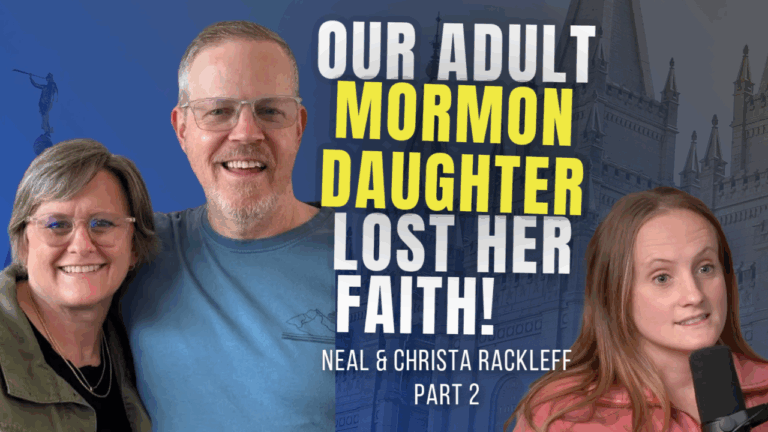 Our Adult Mormon Daughter Lost Her Faith! w/ Neal & Christa Rackleff | Ep. 2018
 400: Top 5 Myths and Truths about Why Committed Mormons Leave the Church
 Navigating a Marriage When One Loses Their LDS Testimony | Ep. 182-185
 LDS Bishop Adam and Marlana Hughes – Leaving Mormonism in Tucson, Arizona | Ep. 1360
 When Your Sister Leaves the Mormon Church – Meggan & Julie O’Neal | Ep. 2144
 Why People Leave the LDS Church and How We Can Help | Ep. 111